
Sunwise launches its third-generation hydrogen dispenser
This archived announcement has been translated automatically from Chinese. Names and technical wording may require editorial verification. Original artwork is preserved where applicable.
On the afternoon of 20 November 2020, Sunwise (hereinafter “Sunwise”) officially released the third generation of hydrogen-filling machines.
At the launch, the heads of the hydrogen energy team of Shanghai Electric Co. Ltd., Chen Haifeng, the Secretary-General of the Shanghai Energy Conservation Industry Association, Seo Jun, delivered separate statements, and Mr. Chen Gang, Chairman of Shanghai International Automobile City (the Group), and Mr. Lee Hatoon, Director of the Hydrogen Energy Office of Shanghai Shin Engor, Inc., inaugurated the Sunwise third generation hydrogen-added machine. The launch was attended by nearly 30 participants, including the media and analysts, from the Shanghai Transport Engineering Institute's Green Traffic Commission, the Special Court of Inquiry, the Bo Wuqingen, the Shanghai Space Industry, Shanghai Fio and the leaders and representatives of partners.
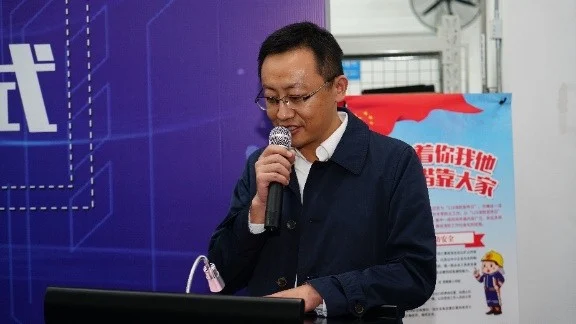
Address by Mr. Chen Haifeng
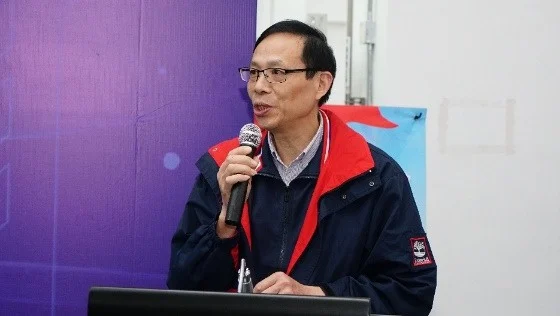
Address by Secretary-General Tsui
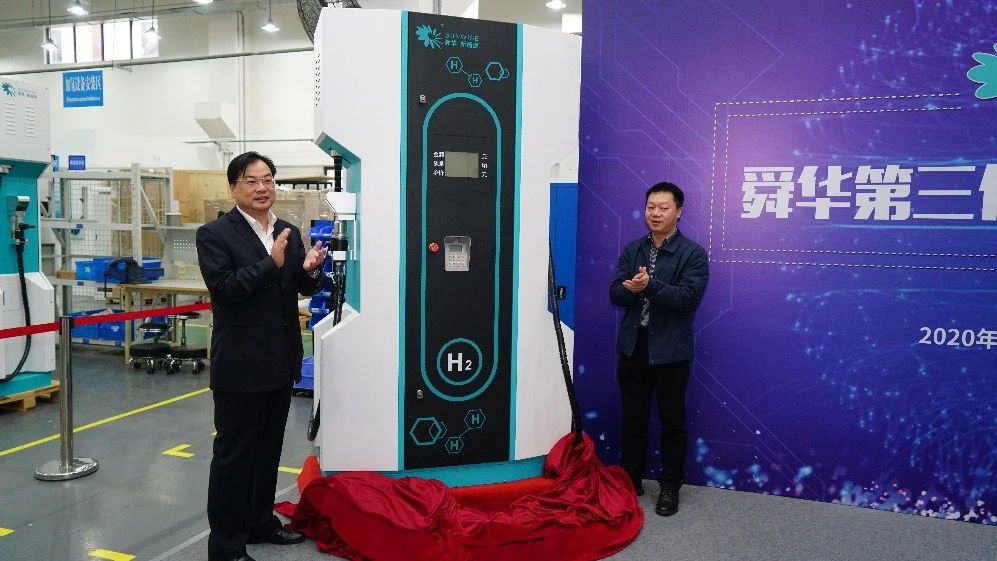
Director Chen and Director Lee Haitao unveiled Sunwise's third generation hydrogen-added machine.
The third generation has the following technical characteristics and market competitive advantages:
1. High security
Design multiple hypertensive protections, hyperheating, electrostatic protections; active monitoring and passive protection of hydrogen leakages; combined with power outages, data outages protection and reappearance.
2. Rapid rate of increase
Accumulation under two different gas source models, regular and low-temperature sources, to ensure a safe and rapid increase.
3. Low heat replacement volume and efficiency
The cooling of air sources uses microchannel-to-heat technologies to reduce heat changers to about 40 cm*30 cm*25 cm and to increase heat exchange efficiency while significantly reducing heat change volume.
4. Smart algorithms, automatic controls
The development of an autonomous smart algorithm, based on multiple factors such as car type, pre-cooling, cooling level, ambient temperature and so on, ensures safety while at the same time increasing at the maximum rate.
5. High Filling (SOC)
(c) The formation of self-inflation control techniques in the context of full-input technology. The full-fill rate can exceed 95 per cent in a communication state; in case of non-communication, the temperature, pressure compensation empirical algorithms and the precise control of the regulating valves ensure that the SOC is greater than 92 per cent after a notation, which is based on Sunwise theoretical calculations and the apostated operational data accumulated for more than 10 years at the Anting Hydrogen Station.
6. e-measurement systems refined
The physical IC card is linked to the virtual membership card, which supports the identification of plates and fully commercializes applications.
7. High speed and maturity of commercial applications
The first key is automatically raised and the number of times you press the pressure, quality, amount etc. is optional.
8. Comprehensive data analysis
Support a variety of means of communication, comprehensive data transmission and preservation, and provide basic safeguards for the realization of large-scale data analysis for hydrogen-filling stations.
High degree of integration
An upscaling model of the pressure levels of 35 MPa and 70 MPa has been compiled, which allows both commercial and passenger cars to be raised.
10. A clean atmosphere, quality
The global hydrogen energy and fuel cell industries are booming, and hydrogen-filling stations are being highlighted as a key link in the hydrogen energy industry chain. In the future, Sunwise will continue to provide strong support for the construction of hydrogen plant infrastructure and will work with partners to build healthy and stable hydrogen energy supply ecosystems.
Prepared by: Zhang Poe
This post is part of our special coverage Libya Protests 2011.
English edition of the original Chinese page. Historical statements, dates and figures are retained as published.